



How to care for your clothes to make them last: A practical guide
The first rule: wash less
Most of our clothes are washed far too often. Jeans don't need to be washed after every wear, nor do wool sweaters or leather jackets. Repeated washing wears out fibers, degrades colors, and distorts cuts.
The principle is simple: wash when necessary, not out of habit. A garment worn for an hour in an air-conditioned office doesn't need to go into the washing machine. Air it out, brush it if necessary, then put it away.
Wool: delicacy and patience
Wool is a living fiber. It regulates heat and resists odors, but it cannot tolerate high heat or mechanical agitation. Key points: wash cold (maximum 30°C), use a delicate or wool cycle, and minimal spinning.
Even better: hand wash in cold water with a gentle product. Never wring a wool item; gently press it to remove water, then lay it flat on a towel to dry. Never hang it on a hanger: the weight of the water would distort the shoulders.
For cashmere, the same principle applies, with even more caution. And store it folded, never hung.
Marseille soap: the discreet ally
For hand washing delicate items, authentic Marseille soap is an excellent choice: simple composition, gentle on fibers and skin, and biodegradable. A few flakes dissolved in cold water are enough for wool. It also helps with stain removal: gently rubbed on a fresh stain before washing, it works without damaging the fabric.
A tip: check the composition. Since the name is not currently protected, many products sold under this name contain additives and fragrances. True Marseille soap is recognized by its short ingredient list, based on vegetable oils.
Linen: embrace the wrinkles
Linen wrinkles: it's its nature, and it's also what makes it beautiful. There's no need to try and prevent it. Machine wash at 40°C, delicate cotton or linen cycle. Remove it slightly damp from the machine and hang it immediately: the weight of the moisture naturally relaxes the main wrinkles.
If you want to iron it, do so when it's slightly damp, with steam, on the reverse side for dark items.
Cotton: strong but not invincible
Cotton tolerates washing well, but suffers from excessively high temperatures which shrink and stiffen it. For quality t-shirts and shirts, 30°C is sufficient in the vast majority of cases. Turn them inside out before washing to preserve colors.
Avoid using a tumble dryer for thick or dyed cotton items: heat accelerates shrinkage and wears out fibers faster.
Leather: nourish and protect
Leather is not washed: it is cared for, whether it's a jacket, a bag, or a belt. Regular cleaning with a damp cloth to remove dust, followed by an application of nourishing balm two to three times a year, is enough to keep leather in excellent condition for many years.
In case of rain, let the leather dry naturally away from direct heat. Never place it on a radiator. Once dry, apply balm. Water marks often disappear after drying and nourishing.
Storage: the forgotten step
A poorly stored garment deteriorates even without being worn. Some simple guidelines: sweaters and knits should be stored folded (hangers distort the shoulders), jackets and coats on wide, padded hangers to maintain their shape, trousers on clip hangers or folded in half over the hanger.
Air your items before storing them; never put away a garment that is damp or still warm from your body. Use fabric garment bags (not plastic) for seasonal items.
Repair rather than replace
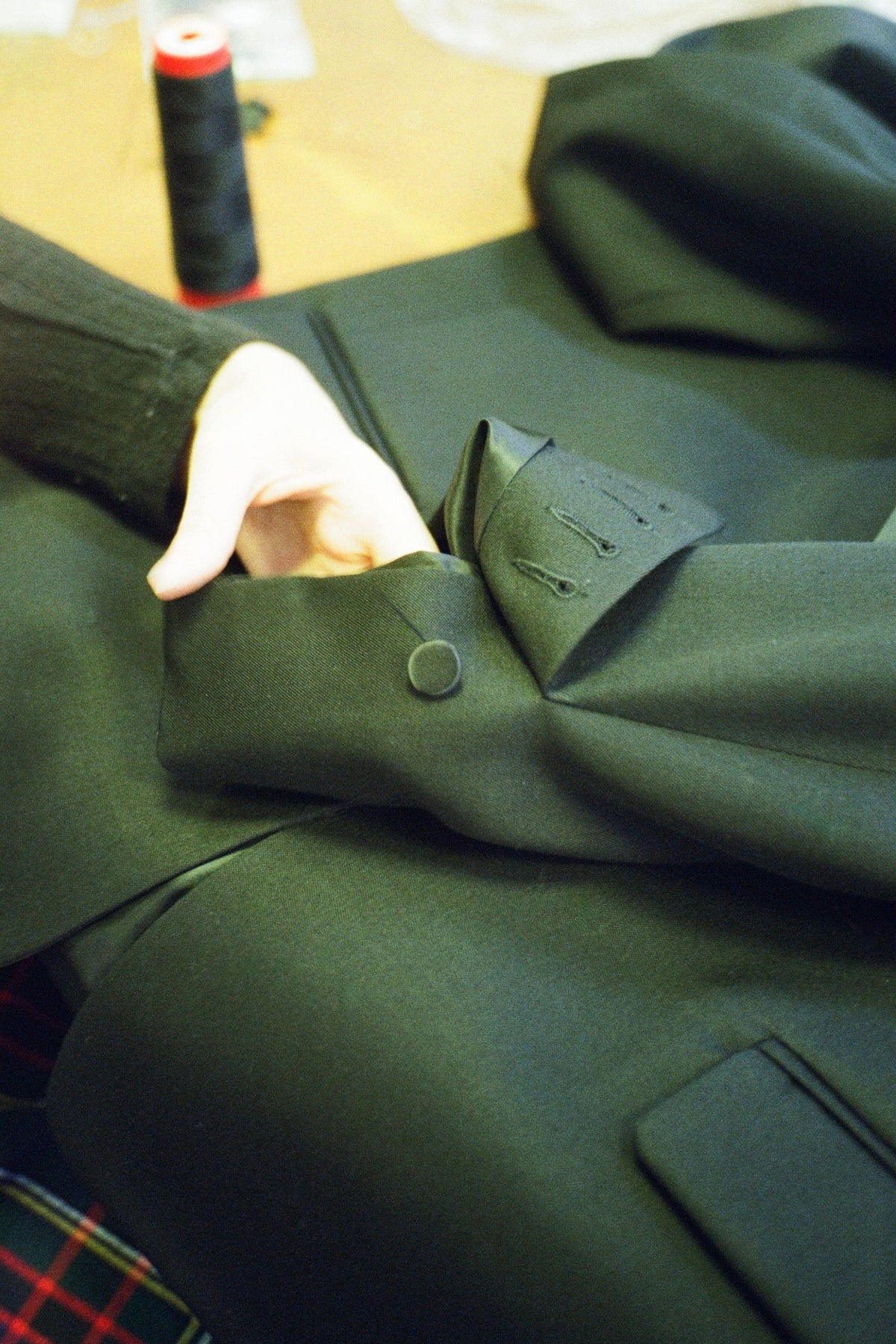
A popped button, a loose seam, a snag on a sleeve: these small repairs are accessible to anyone with needle and thread, or for a few euros at a tailor. Yet, the majority of clothes end up in the bin for reasons that could have been fixed in ten minutes.
Learning to care for and repair your clothes extends their lifespan by several years. This is the most effective way to achieve a more sustainable wardrobe, long before buying anything new.